







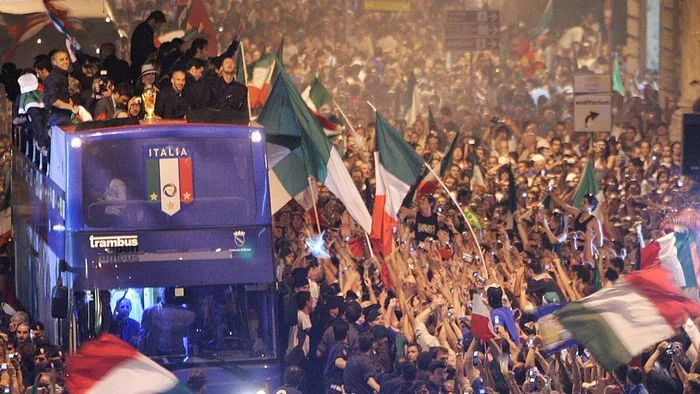
LIPPI’S ITALY. The recipe: talent, clarity, and the ability to win even while suffering. Now the Azzurri are on the couch for the third edition in a row: a nebulous future.
Read more Gaetano-Atalanta, here we go: medical exams and then the signing
Reading 2 min.Twenty years have passed since that sky over Berlin painted blue and Italy in delirium for Marcello Lippi’s National Team. And it almost seems like a memory swallowed by the night of time. Celebrating the anniversary of a World Cup won with a mix of heart, pride, strategy, and talent, right today, with the American World Cup slipping away amid surprises and controversies, and Italy forced in front of the TV, almost seems paradoxical. And the symbolic power of that realized world dream clashes with the abyss of a tricolor football sunk into the abyss of three consecutive missed qualifications.
The three missed World Cups
The last Italian trace in a World Cup dates back to June 24, 2014, in Brazil, on the day of the narrow defeat against Uruguay (0-1) with Cesare Prandelli on the bench, who imposed the second burning consecutive group stage elimination for the Azzurri after that of 2010. Then in the palmares there is only the deep void of three missed World Cups, interrupted by the extraordinary adventure in the post-Covid European Championship, won in 2021, under the guidance of Roberto Mancini and with the late Luca Vialli as an inspiring guide, together with the goal twin in blucerchiato, of a prodigious exploit, but remained an isolated feat.
Italian football, in fact, now, flounders in the contradictions of its mistakes, bitterly tasting seeing the third consecutive World Cup from home. And these days, perhaps, the memory of twenty years ago and the triumphant, clear, humble, but peremptory ride of Marcello Lippi’s Italy shines even more among the dark clouds of the present.
Those talents and the ability to suffer
Yes, because the added value of that group, although enriched by pearls of pure talent (Totti, Del Piero, Pirlo, just to name three) was precisely in the ability to suffer, to snatch victories with nails, to always and in any case make a team, to put technique at the service of the collective: and here the merits of Marcello Lippi, a balanced and charismatic leader, were enormous. That World Cup is remembered for crucial moments like the 1-0, 10 against 11, inflicted on Australia in the round of 16, with the penalty earned by an overflowing Fabio Grosso and scored with steel nerves by Francesco Totti in the last breath of the match.
The most beautiful match
Then the most beautiful, exciting, and emotionally moving match, against the hosts
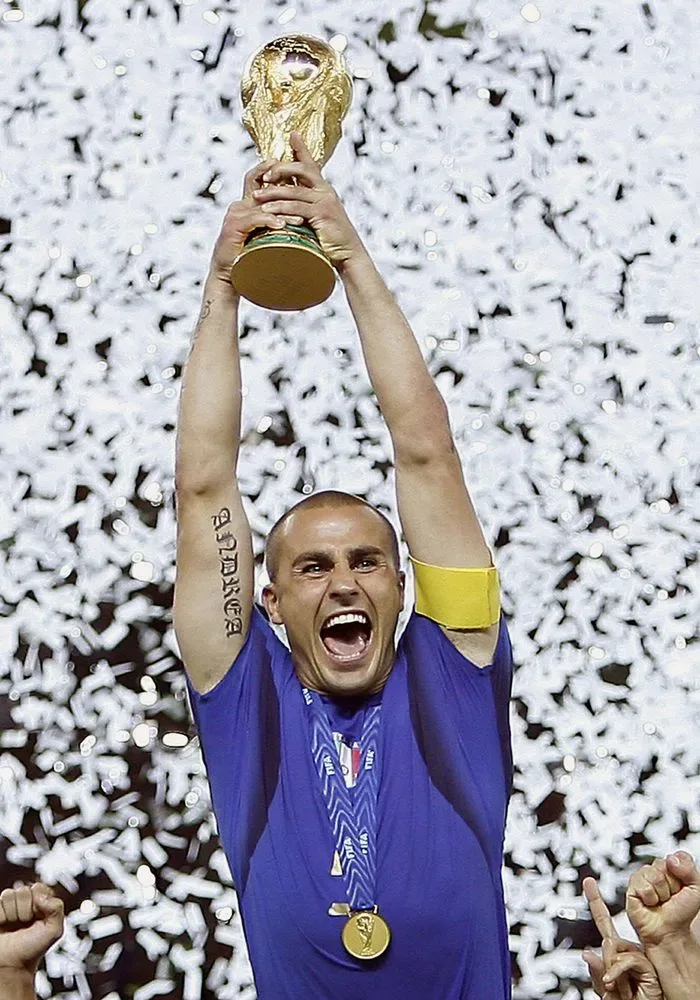
of Germany, in Dortmund. An implacable 2-0, triggered first by the best “supporting actor” of the German World Cup, that Fabio Grosso, on paper a luxury supporting role, and in fact, a winning ace to play on the World Cup poker table. And then completed by Del Piero’s embroidery to close a sharp and lethal counterattack, born of Lippi’s practical, strategic, and winning football. It was the Italy of Buffon, Del Piero, Totti, Pirlo, personalities with the fabric of champions, but it was also the Italy of Gattuso, Zambrotta, Cannavaro, Grosso indeed, in that tactical context woven by Lippi’s sagacity, even more decisive than the magical feet of the fantasists.
Classy moves, but also and above all sweat and defensive compactness of an Italy capable of raising the quality level with the magic of the number 10s, but also growling in pressing with the fierce determination of defenders, midfielders, and fullbacks. One of these, Grosso, will become the symbol of that World Cup lifted to the wind in the Berlin sky. His the penalty earned against Australia and scored by Totti, his the first seal against Germany in the semifinal. And the last penalty converted in a final against France, won by gritting teeth, with temperament and moral strength before technique and flashes of the champions, could only start from his foot.
The July 9 final
That final on July 9 in Berlin (1-1 before penalties, with Zidane’s “panenka” from 11 meters equalized by Materazzi’s header) was a suffering, let’s say, against a very strong France, reduced to 10 in the final rush of extra time for Zidane’s famous and infamous headbutt to Materazzi. The victory came on penalties (Trezeguet’s only mistake), amid a thousand struggles, perhaps an inevitable epilogue for an Italy that remained united always, while outside the Calciopoli controversies raged, and that became indomitable and “worker-like” to grasp the greatest goal. Heart, sacrifice, tactics, along with some brushstrokes from the champions on the canvas of that hard-fought and beautiful World Cup. And today, twenty years later, it is a whirlwind of conflicting feelings between the vivid memory of that dream night that inevitably mixes with the sad melancholy of a World Cup experienced as spectators.
Read more Atalanta, no away fans in friendlies