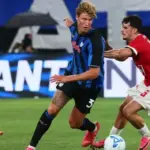

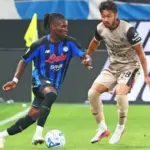


ATALANTA. The great former player will miss the friendly match on Saturday, August 8th against Schalke 04: “It’s the challenge of my dreams, maybe we’ll meet again in Europe.” “My children born there and the Covid experienced among you: that’s how I grew up.”
Read more Atalanta, Schalke 04 operation: friendly match on Saturday
Reading 8 min.“These are intense days, I’ve been here for two weeks but it feels like much longer. It’s a shame not to be there tomorrow (Saturday, August 8), I really cared a lot: I took a bad hit in the last friendly, a knee to the thigh, and some fluid formed. Nothing serious, but I won’t be able to play this match between the two teams of my heart. But it will happen in the future, maybe in Europe, who knows…”
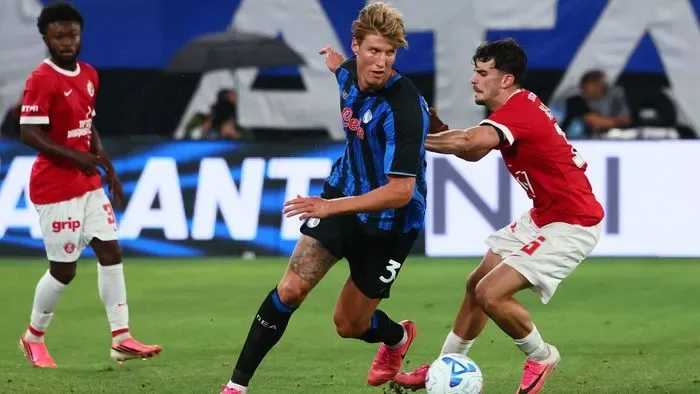
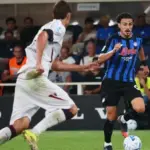
Schalke 04, the childhood dream team, against Atalanta, the team where he lived the best years of his career, between June 2017 and January 2022. Years in which he also became the center of high-level political debate when German Chancellor Angela Merkel, visiting Palazzo Chigi, discussed with Italian Prime Minister Mario Draghi about “that excellent player from Bergamo” who the night before, wearing the white jersey of his national team, had put on a show against Portugal at Euro 2021. Gosens will not be on the field Saturday, August 8 (5 PM) for “his” challenge, the season opener celebration of the Gelsenkirchen team which on this occasion will celebrate with its fans the return to the Bundesliga, the top German league. 100,000 people are expected in the stadium area, with 55,000 tickets sold as of yesterday, which will easily reach the 61,500 sold-out capacity. Gosens won’t be there, but that doesn’t mean he gives up diving into the lane of memories and feelings with the same ease and incisiveness as when he moves with the ball along the left side of the field.
Even in the golden years in Bergamo, when the usual stage was the Champions League, Gosens always said Schalke was the team of his dreams, where he wanted to play one day. What is special about this jersey and how much does it weigh not to play this match against Atalanta, his favorite match?
“The story begins when I was 6 years old, and I had nothing to do with football. In Emmerich, the town where I grew up, my dad always threw me the ball, but I wasn’t interested at all. Then one day he took me to the Veltins Arena, and my life changed. I remember that moment very well, as if it were yesterday: I climbed up that staircase, reached the stands and at some point below me I saw the field, with the players. Something clicked there, I immediately said I wanted to do the same thing. Obviously, I didn’t yet know what it means to become a professional footballer and how much road there is to travel, how much effort, how much sweat. But the love for football was born at that moment. And it’s nice that now the circle closes by coming back here after having come a long way, even if maybe following a somewhat winding path.”
And what do Bergamo and Atalanta represent in this journey?
“If I have to say it in one word, Bergamo for me is home. So many things happened in Bergamo that it’s impossible to remember just one. My two children were born there, so the relationship is already special, and then we still have many friends we hear from every day. Those who are still there (fewer and fewer, now that Djimsiti is leaving too), but also all the other players I hear from almost every day and who have become brothers to me. The years in Bergamo were very important for my growth. Both sporting and human. I will always carry with me the Covid period: it made us grow as a people, and I say “us” because I feel part of this people with whom I lived through this bad moment. From which a bond was born that will always be very strong. When I think of Bergamo, I think of strong emotions.”

But what was the first impact like? After all, a certain basic affinity in character and values, starting from the work culture, should have facilitated integration.
“I remember that day very well. I arrived in Bergamo with my dad to see the match against Verona. And after the stadium, we went to Città Alta to eat pizza. I was full of doubts: taking that step meant leaving my comfort zone, and I asked myself all the questions one asks in that situation. We walked a lot and when we sat at the table I told my father: ‘I have the feeling that coming here is the right thing for me at this moment.’ I didn’t even know how to explain it, but I felt I was taking a decisive step. That day changed my career. Also thanks to the meeting with Gasp, who trained me.”
Indeed, how much did Gasperini influence building the devastating Gosens of those years?
“He made me grow enormously, even if it wasn’t always easy with him. I remember the first days of training camp in Clusone: I was dead tired, never felt such a sensation in my legs before. I couldn’t wait for dinner to end and by 8:45 PM at the latest I was in bed. I told my wife: if you want to talk to me call before dinner, because if I don’t go to sleep I won’t survive the next day. That’s how it all started. That’s how my special relationship with Bergamo began, made of trust and emotions.”
And even now, perhaps even more than Atalanta that won the Europa League, in the hearts of fans remains that of him and Hateboer, Freuler, de Roon, Papu, Ilicic, Muriel and Zapata…
“That really makes me very happy. We always talk about it among ourselves, and we recently said it also with Marten: the only thing we really missed in that period was a trophy to hold in our hands. The experiences lived together, the Champions League qualifications, the finals are all things that remain. But with a trophy… We often keep in touch with everyone: Hateboer, Freuler, Djimsiti, Toloi, Palomino, Ilicic, de Roon, Muriel… And this is really strange in football, because this world of ours goes so fast that you are friends for a moment, as long as you play together, but then when you change teams you lose touch, you don’t feel connected anymore… Instead, from that team, 7, 8, 9 players remain who talk practically every week. Our great strength was the locker room: different characters, even particular ones, among whom an exceptional, crazy balance was created. Training ended and we stayed there for two or three hours chatting, there was never a rush to go home. And then maybe we met up to go out for dinner together. The relationship went beyond football, and people sensed it, that’s why we stayed in their hearts. They recognized the group and identified themselves as part of the group: team, city and fans, there was no difference. When we walked through the city streets we were fans, and the fans when they came to the stadium became players, they entered the field with us.”
The trophy was missing, but there are many moments to remember. The best one?
“If I have to choose, I say the first time we qualified for the Champions League, in 2019. Incredible season, unexpected result achieved on that rainy evening in Reggio Emilia, against Sassuolo. And then… Well, it’s a paradox, but another great memory is the first time we played in the Champions…”

Excuse me? But you lost four to zero in Zagreb against Dinamo… A beating.
“Yes, but it was still an unforgettable moment: for all of us it was the first time in the Champions. We arrived very pumped, we thought we would break the world. Instead, oh my, what a disgrace (euphemism, ed.)… We found ourselves silent in the locker room. Not even Gasp spoke, who usually after such performances would tear down the locker room with his shouts. Instead, nothing. There he was too, silent, petrified. He expected everything that evening, but not that we would make such a figure. Yet it helped us a lot: we arrived there thinking we were at the top, because we were in the Champions, but we understood that between us and that world there was a discrepancy. It was a different level, and to be there we had to grow. And we grew. We got to play that match in Lisbon against Paris Saint-Germain, after Covid, after everything we and the people of Bergamo had been through. And I still have the feeling today that we could have gone further. We had several injured out, we finished with a Primavera player on the field against the PSG stars. If we had Ilicic, who that year was at such levels to compete for the Ballon d’Or, who knows… We would have gone to play a one-off match with Leipzig and anything could really have happened.”
Let’s talk about today’s Atalanta. How do you see this radical tactical change after ten years?
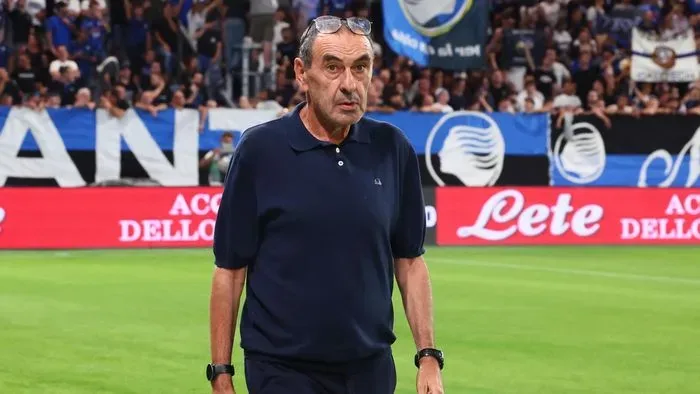
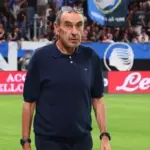
“I’m very curious. I can’t wait to see Atalanta further on, in the league. In my opinion, there is no doubt that mister Sarri is a great coach: he has a clear playing identity, he knows exactly what he wants from the team and this is seen from all the teams he has coached. And this is already a very important fact. At Schalke we just had the technical meeting, watching the opponents’ video, preparing for the game with Atalanta, and we immediately saw Sarri’s characteristic principles. Of course, it was a really important switch after 10 years of Gasp, and then Juric and Palladino who more or less play the same game, the 3-4-3 with the wingers or wing-backs who had a fundamental role. Now it switches to 4-3-3 with players used to doing different things. But we are still talking about important players, I’m really curious to see how it will go. I hope it goes well, because I am an Atalanta fan.”
But what was, as an opponent, the biggest difficulty in facing Sarri’s teams?
“Above all, ball possession. How they move, how they are connected between all the lines, and then the chains: on the right and on the left… All movements done perfectly, following them becomes really difficult. It’s a very beautiful game: it plays inside, then outside, always keeping minimal distances between players. And so it leaves you very little time to intercept or anticipate the play.”
You have played in the Champions League (also reaching the final with Inter), the Europa League and in the last two years with Fiorentina also the Conference League. What kind of competition is it compared to the others, and what should Atalanta expect facing this new experience?
“It’s clear that for a player the Champions is the most beautiful thing in the world, but I am someone who loves the romantic aspects of football, and for me it is very fascinating to go to countries never seen before to play against unknown teams. The Conference made me crazy, it was really a great experience. We went to play in Bialystok, Poland, against Jagiellonia: two and a half hours flight, then two and a half hours by bus to play at 13 degrees below zero. All my teammates shook their heads and wondered what we had gone there for, I was thrilled. That’s how I am: I know I will never go back there, but to play football I went. You get to know different countries, teams that play a different kind of football. Of course, then the travels weigh when you come back on Friday and maybe you have to play on Sunday. But it’s always worth it. And then it’s also the chance to bring home a trophy, because it’s clear that if we analyze the technical values Atalanta is one of the favorites.”
You mentioned Palladino, who was your coach in Florence two seasons ago. Last year in November he arrived in Bergamo, but at the end of the season he was not confirmed. What idea did you get? What didn’t work?
“Honestly I didn’t expect he wouldn’t be confirmed, because from the outside it seemed to me that he had done a good job both with the team and at the individual level. It seems to me, however, that the club’s decision was not against Raffaele, but more for a total reset, for a desire to completely turn the page tactically after 10 years of a certain kind of football. In short, to want to go towards the future with a different identity.”
Speaking of future and identity. Italian football and German football are going through a period of crisis, even if Germany, at least, has always qualified for the World Cup. Do you find points of contact between the two situations? And how do you think it is possible to get out of it?
“In Italy, as in Germany, I see and read a lot of opinions that in the end all say: this is the problem. Fine, but it’s one thing to identify the problem, but then you also have to find a solution. I myself am convinced that we are dealing with a structural problem that goes down to the youth sectors, and from there everything starts. But even here in Germany, as in Italy, it stops there: we know what the problem is, but we have no idea how to solve it.”
Read more Colere: the Yankee Run lights up the Val di Scalve